
Introduction to Building Information Modelling (BIM)
The digital transformation of construction
By Tun Zaw Oo · MEP BIM Coordinator (Fire Protection) · ISO 19650-2 PIM Practitioner (BRE Global)
In today’s construction industry, Building Information Modelling (BIM) is no longer a buzzword; it is an expectation. Architects, engineers, contractors and facility managers now rely on BIM to design, deliver and operate built assets more efficiently, through better collaboration and better information management.
What is BIM?
ISO 19650-1 defines BIM as the use of a shared digital representation of a built asset to facilitate design, construction and operation processes, forming a reliable basis for decisions.
Unlike traditional 2D drawings, BIM uses intelligent 3D models whose objects carry geometry, data and relationships. That information supports the whole lifecycle, from design and construction through to operation and maintenance.
Core principle: BIM is not just 3D modelling. It is about information management and collaboration.
Industry context and adoption
BIM adoption continues to grow worldwide. In the UK, NBS’s Digital Construction survey (published January 2022) found that around 70% of the construction professionals surveyed were using BIM.
- United Kingdom: BIM Level 2 was required on centrally procured public projects from 2016. It has since been replaced by the BS EN ISO 19650 series and the UK BIM Framework, which set out information management requirements rather than “levels”.
- Singapore: a leader in BIM implementation, with BIM e-submission for regulatory approvals introduced progressively by the Building and Construction Authority (BCA).
- Emerging markets, including Myanmar, are increasingly adopting BIM to align with international project standards.
BIM “dimensions”: beyond 3D visualisation
The “dimensions of BIM” are an industry convention, not part of ISO 19650. They describe how different uses of information are added to the model. The numbering beyond 5D is not used consistently, so it is always best to state the actual information use.
| Dimension | Description | Key applications |
|---|---|---|
| 3D: Geometry | Spatial design and visualisation | Coordination, clash detection, stakeholder communication |
| 4D: Time | Construction scheduling | Sequencing, logistics planning, progress tracking |
| 5D: Cost | Quantity and cost integration | Quantity take-off, cost planning, budget control |
| 6D: Sustainability* | Environmental performance | Energy simulation, carbon analysis, lifecycle impact |
| 7D: Facility management* | Asset information | Maintenance planning, space management, operations |
*Some sources swap 6D and 7D.
Each added use turns the model from a visual tool into a decision-making platform.
Benefits of BIM
Organisations that implement BIM effectively achieve:
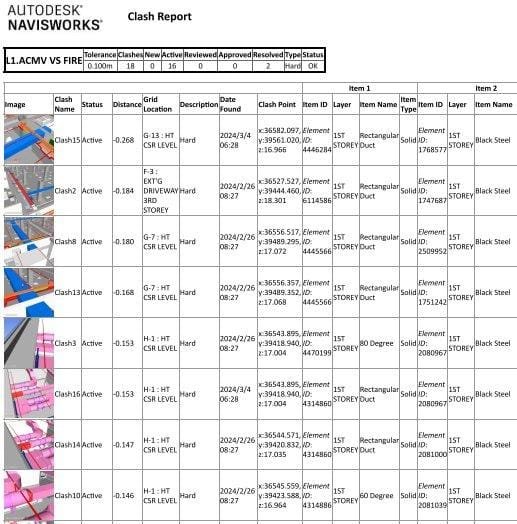
- Less rework, through early clash detection and coordination
- Improved cost certainty
- Faster, more predictable project delivery
- Better collaboration between disciplines
- Better building performance after handover, through structured asset data
What BIM looks like in practice
Definitions only go so far. Here is what BIM has meant on my own fire protection and MEP projects in Singapore:
- Coordination before installation: on an industrial cleanroom facility, 303 slab and wall penetrations were coordinated with the structure in the model rather than cut on site.
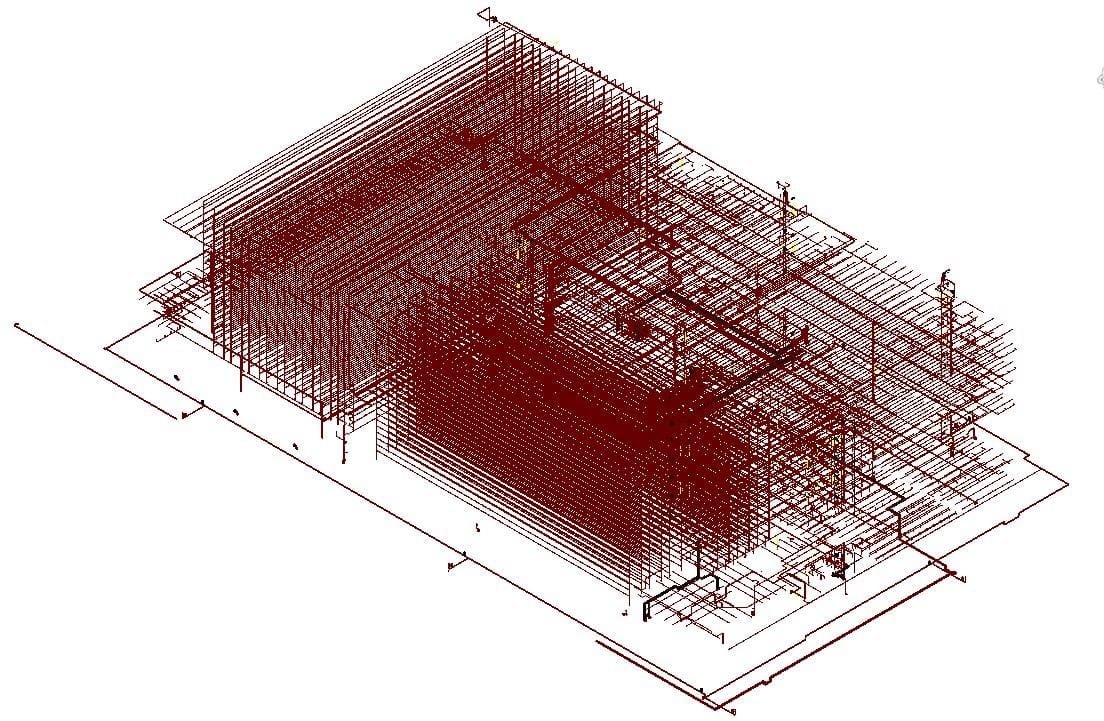
- Complex systems modelled correctly: on a 45 m high automated cold store, in-rack and ceiling sprinklers were modelled and coordinated with the racking steel, roof trusses and pre-action valve zones before submission.
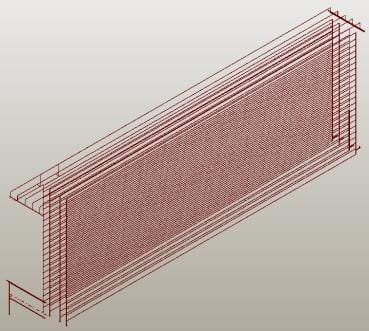
- Information, not just geometry: on a six-storey food factory, all 24,546 sprinkler heads carried FM asset data, checked automatically before handover.
- Managed information delivery: on an ISO 19650-2 project, 14 fire protection information containers were planned in a TIDP, checked before sharing and delivered through the CDE.
International standards: the ISO 19650 series
Professional BIM implementation follows internationally recognised standards so that information is managed consistently. In the UK they are published as BS EN ISO 19650.
| Standard | Purpose |
|---|---|
| ISO 19650-1 | Concepts and principles |
| ISO 19650-2 | Delivery phase of assets (design and construction) |
| ISO 19650-3 | Operational phase of assets |
| ISO 19650-4 | Information exchange: the process and criteria for reviewing and accepting information |
| ISO 19650-5 | Security-minded approach to information management |
| ISO 19650-6 | Health and safety information (published 2025) |
Common Data Environment (CDE)
A Common Data Environment is the agreed source of information for a project or asset. It collects, manages and shares information through a managed process, supported by a technology platform.
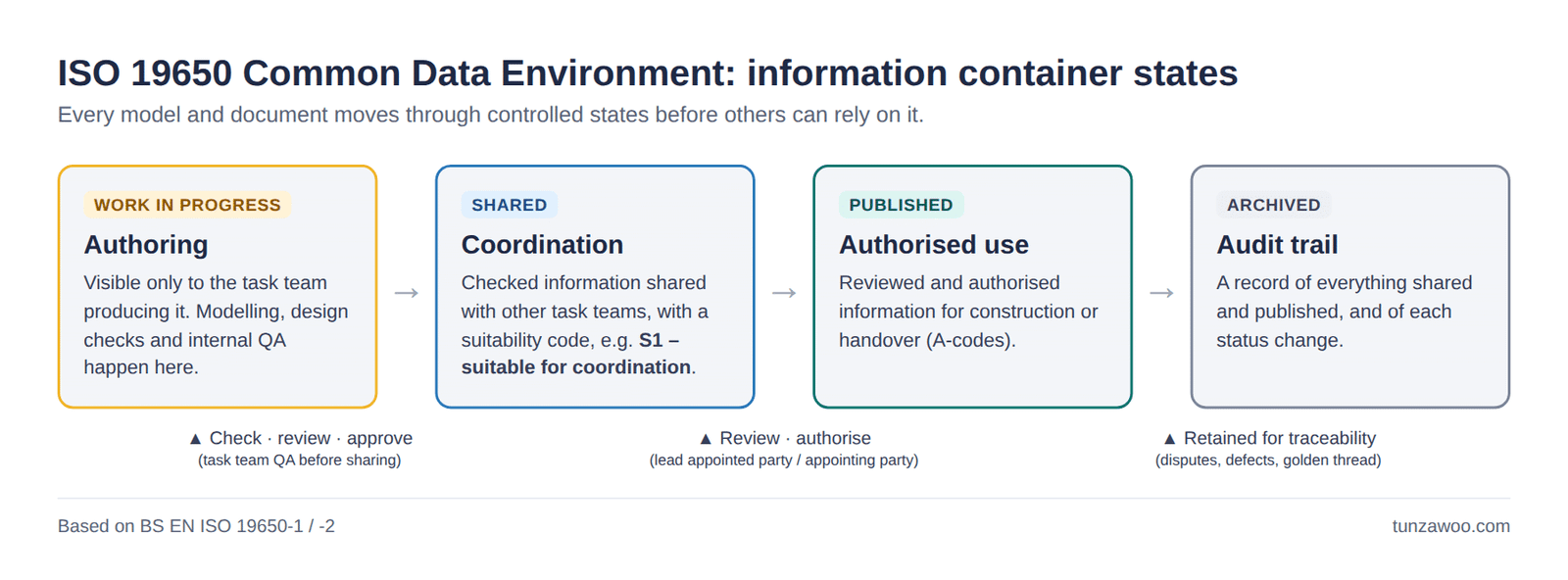
Information container states (ISO 19650):
- Work in Progress (WIP): information being developed by its task team, not visible to others
- Shared: checked information shared with other task teams for coordination and review
- Published: authorised information for use, for example construction or handover
- Archived: a record of all shared and published information, giving a full audit trail
The CDE provides a single source of truth, prevents version conflicts and records who changed what, and when.
Level of Development (LOD) and Level of Information Need
Level of Development (LOD) describes the reliability of model elements at each stage. It comes from the US BIMForum LOD Specification and is widely used internationally, including in Singapore. LOD definitions must always be project-specific and documented in the BIM Execution Plan.
| LOD | Description | Typical use |
|---|---|---|
| LOD 100 | Conceptual representation | Feasibility studies, massing |
| LOD 200 | Approximate geometry | Schematic design, early costing |
| LOD 300 | Accurate design intent | Construction documents, coordination |
| LOD 350 | Interfaces and connections | Trade coordination |
| LOD 400 | Fabrication and assembly detail | Shop drawings, installation |
| LOD 500* | Field-verified representation | As-built records, facility management |
*The BIMForum specification does not define LOD 500. It is used on some projects to mean field-verified, as-built information, not a higher level of geometric detail.
UK practice: ISO 19650 projects use the Level of Information Need (BS EN ISO 7817-1:2024, which replaced BS EN 17412-1). For each deliverable, it defines the geometry, the alphanumerical data and the documentation required, based on the purpose the information will serve. Many UK appointments now specify this instead of LOD numbers.
BIM workflow across the project lifecycle
- Concept design and visualisation
- Multidisciplinary model development (architecture, structure, MEP)
- Clash detection and validation
- Coordinated models and construction documentation
- 4D planning and scheduling
- 5D quantity take-off and cost planning
- Project Information Model (PIM) deliverables
- Construction monitoring and control
- Asset Information Model (AIM) and handover
Data exchange and interoperability
- IFC (Industry Foundation Classes): the open standard for model exchange (ISO 16739-1)
- BCF (BIM Collaboration Format): an open format for exchanging coordination issues between tools
- COBie: a structured asset data format for handover to facility management
Common BIM software ecosystem
- Authoring: Revit, ArchiCAD, Tekla Structures, Bentley OpenBuildings
- Coordination: Navisworks, Solibri, Autodesk Construction Cloud (formerly BIM 360), Trimble Connect
- Analysis: IES VE, DesignBuilder, ETABS
- Facility management: Archibus, IBM TRIRIGA / Maximo, FM:Systems
BIM Execution Plan (BEP)
Under ISO 19650, the delivery team prepares a pre-appointment BEP when tendering and a detailed post-appointment BEP once appointed. It covers:
- How the team will meet the Exchange Information Requirements (EIR)
- Information standards, methods and naming conventions
- Roles and responsibilities
- Software, federation strategy and data exchange formats
- Quality assurance and model checking procedures
Emerging technologies integrated with BIM
- Digital twins: linking asset information with live operational data
- Artificial intelligence: automated checks and predictive analysis
- Reality capture: laser scanning and point-cloud modelling
- Extended reality (XR): VR, AR and MR for design review and site use
Conclusion: the future is digital
BIM has transformed construction by enabling smarter decisions, higher quality and better lifecycle performance. As AI, IoT and digital twins become mainstream, BIM provides the structured information foundation that smart buildings and cities depend on.
For established markets such as the UK, the focus is now on information quality and ISO 19650 compliance. For developing construction markets, BIM adoption is a major opportunity to align with international standards and compete globally.
Continue the series
- BIM vs CAD: key differences and lessons from delivering both
- BIM vs Revit: understanding the fundamental distinction
- ISO 19650 in MEP: with a real task-team case study
- BIM Automation: 10 Dynamo and Python tools for model QA
- When BIM stops at handover, we all lose
- How I run MEP clash coordination: from clash test to RFI to closure
- Model QA is more than clash detection
- Why a fire protection engineer makes a stronger BIM coordinator
- From Singapore to the UK: what transfers and what changes
- From site engineer to BIM coordinator